
Stop Self-Sabotaging (Without Fighting Yourself)
Five practices to help your nervous system choose possibility over protection.


Earlier this week, I argued that self-sabotage isn’t usually a sign that you’re lazy, broken, or secretly allergic to happiness.
It’s often a sign that your nervous system is trying to protect you.
Unfortunately, our nervous systems are a bit like the smoke detector in my house. They’re incredibly useful. They’re also capable of going completely feral because I dared to make toast.
Many of us are walking around with nervous systems that respond to launching a business, setting a boundary, or texting someone we like with the same level of concern they might reserve for an actual bear.
No wonder we end up scrolling Instagram instead of doing the thing we actually want to do. If that’s where you find yourself, this guide isn’t about forcing yourself to “just do it.”
It’s about helping your nervous system discover that the life you’re trying to build isn’t a threat — even if it feels that way sometimes.
1. Figure out what self-sabotage actually looks like for you
When people hear “self-sabotage,” they usually picture dramatic moments.
Quitting.
Giving up.
Blowing up your life.
Sometimes that’s true. But self-sabotage is often much sneakier. Mine likes to wear glasses and carry a clipboard.
It says things like:
Let’s just do one more round of research.
Maybe we should reorganize our workspace first.
You know what would really help us write this article? Reading three more books about writing articles (lol).
Very convincing. Your version might look different.
Maybe you become the most productive person alive — as long as the task has absolutely nothing to do with the thing you actually care about.
Maybe you volunteer to help everyone else or you convince yourself the timing isn’t quite right. Maybe you spend six hours choosing a font.
I wish I were kidding, but these are real examples from my life!
The goal isn’t to judge the pattern. The goal is to recognize it for what it is.
Try asking yourself:
When I avoid something important, where does my energy usually go instead?
Because it always goes somewhere.
2. Ask what you’re trying to protect — not what you’re doing wrong
This question has probably changed my life more than any other.
Instead of asking:
What’s wrong with me?
Try asking:
What is this part of me trying to protect?
Maybe it’s protecting you from rejection and the feelings of failure that accompany it.
But it also could be protecting you from success, disappointing someone you care about, being misunderstood, or discovering that what you’ve wanted for years isn’t actually what you want anymore.
That’s the thing about self-sabotage. It usually makes a lot more sense once you understand what it’s trying to prevent.
Your nervous system isn’t trying to ruin your life. It’s trying to prevent pain using a playbook it wrote years ago.
The problem is that it hasn’t yet realized your world has changed. Or that you have.
Try asking yourself:
How old does this fear feel?
Not how old are you. How old does it feel?
Sometimes the answer is surprisingly young.
3. Thank your nervous system for its terrible advice
Hear me out!
The next time your brain says:
Absolutely not. We cannot possibly send that email.
Try responding with something like:
Thank you for your concern.
Seriously. Not sarcastically.
Imagine your nervous system as an overprotective relative. You don’t have to do everything they suggest. But arguing with them usually doesn’t help.
You can appreciate that they’re trying to keep you safe while gently deciding not to take their advice this time.
This isn’t about pretending fear isn’t there. It’s about remembering that fear doesn’t automatically get the final vote on your life or how you show up for it.
Try asking yourself:
What would happen if I treated this fear like information instead of instructions?
4. Make the next step laughably small
One of the biggest mistakes I make is assuming I need courage for the entire journey. Usually I only need enough courage for the next five minutes.
Don’t write the book. Write one paragraph.
Don’t redesign your entire life. Send one email.
Don’t become the kind of person who effortlessly sets boundaries. Practice saying one honest sentence.
Your nervous system learns through experience — not motivational quotes. Every small action becomes evidence that uncertainty is survivable.
Tiny isn’t cheating. Tiny is neuroscience.
Try asking yourself:
What’s the smallest version of this that still counts?
Then do that. Over time, those tiny actions compound.
5. Celebrate your nervous system — not just your results
Here’s something I’ve been practicing lately.
When I finish something that scared me, I don’t immediately ask:
Was it good? (Am I good?)
I ask:
Did I stay connected to myself while I did it?
Because that’s actually what I’m trying to build. Not a perfect career, relationships, essays, or art. But a nervous system that trusts me.
Every time you have the difficult conversation, hit publish, apply for an opportunity that feels like a stretch, choose honesty over people-pleasing, you’re casting a vote for a different future.
Don’t skip over celebrating because the outcome wasn’t exactly what you hoped. Your nervous system is paying attention. Give it something worth remembering.
Honoring where you are in the process is how you continue to build the capacity to keep going.
Try asking yourself:
What evidence did I create today that I can handle more than I used to believe?
Want to practice this with us?
One of the hardest things about changing old patterns is that we often try to do it alone.
We might read books, listen to podcasts, or save a million posts about how to change. We promise ourselves that this week, this month, or this year we’ll begin to show up differently.
And then life gets busy, our nervous systems get overwhelmed, and we slip back into the patterns that once helped us survive.
That’s exactly why I’m creating Creative Reset Studio.
It’s a weekly space inspired by my 1:1 client practice where we practice — not perform. Together, we use creativity, reflection, and evidence-informed somatic practices to gently expand our capacity for uncertainty, self-trust, and meaningful change.
Changing the patterns that have kept us safe isn’t something we think our way into. It’s something we practice. And it’s something that becomes more possible when we do it with support.
If you’re ready to stop waiting until you feel confident enough, healed enough, or ready enough to begin creating the life you want, I’d love to have you join us.
→ Learn more about Creative Reset Studio here.
Hi, I’m Bowie 👋🏼
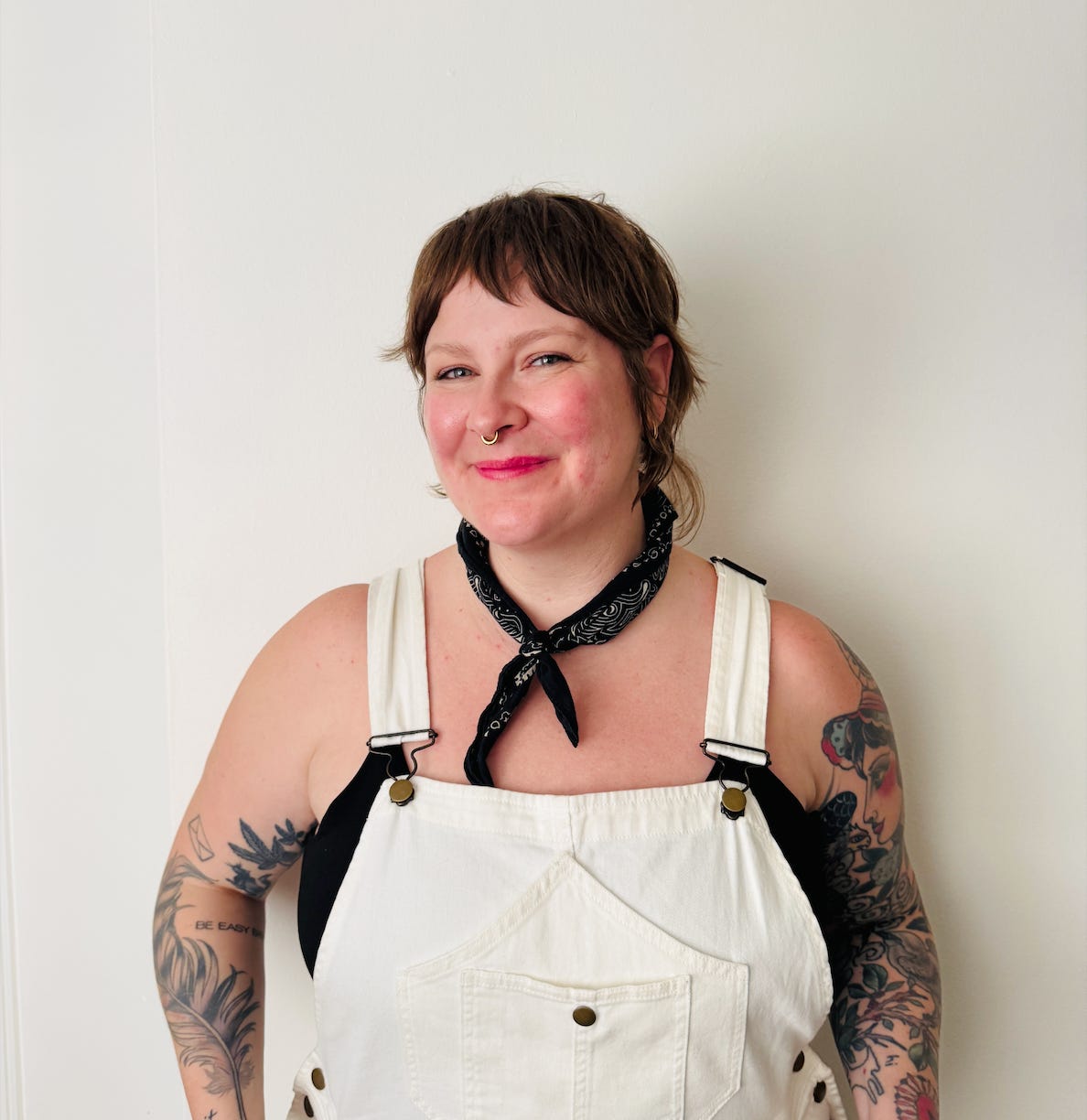
I write about creativity, relationships, psychology, and reinvention — and how we stop surviving and start participating in our lives again.
If this essay resonated, consider subscribing. New essays arrive every Tuesday, with practical guides every Friday. I’m currently practicing taking the last week of the month off to rest since it’s an essential practice for sustaining my creativity.
Reply here or send me a message on Instagram @bowierowie if you’d like to learn more about the Creative Reset Studio — Founding Membership or DO SOMETHING DIFFERENT: A Relationship Lab, both opening soon.